

Purity & Safety · 2026-07-27 · 5 min read
How Can You Check If Turmeric Powder Is Pure? 7 Practical Tests Every Consumer Should Know
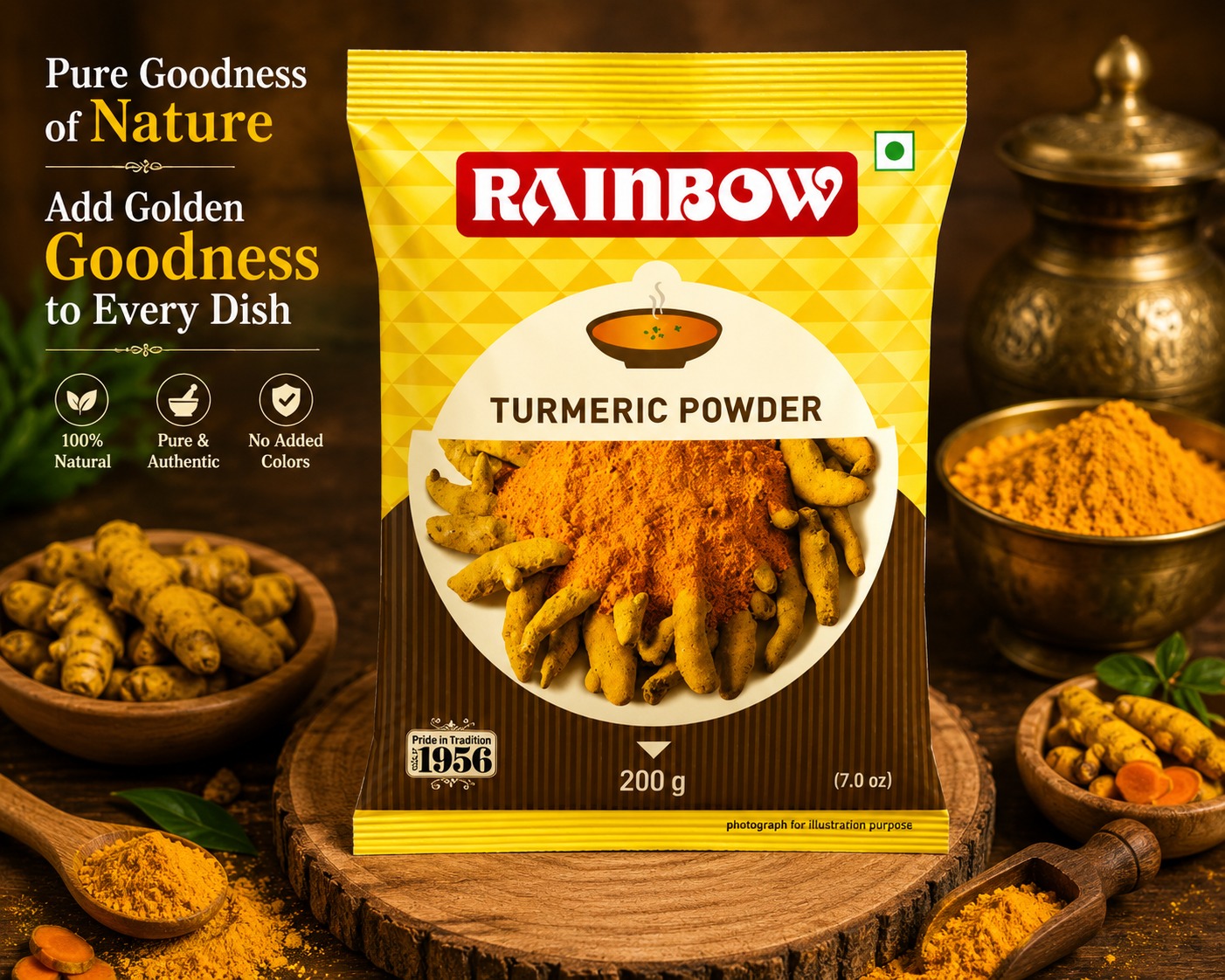
Turmeric has been called India’s Golden Spice for centuries.
From curries and pickles to traditional recipes passed down through generations, it’s one of the most important ingredients in Indian cooking.
Because turmeric is used so widely, it’s also one of the spices consumers worry about the most.
Questions like:
- ✦Is my turmeric genuine?
- ✦Why is it so bright yellow?
- ✦Can I test it at home?
are searched thousands of times every month.
The good news is that some simple screening tests can help you spot potential issues. However, they are only preliminary checks. They cannot replace laboratory testing, which is the only way to conclusively determine purity. FSSAI also provides consumer awareness material through its Detect Adulteration with Rapid Test (DART) initiative and publishes official laboratory methods for confirming specific adulterants.
What Makes Turmeric High Quality?
Before testing turmeric, it’s important to understand what you’re looking for.
A good turmeric powder should have:
- ✦Characteristic earthy aroma
- ✦Bright to deep yellow colour (depending on the variety)
- ✦Fine, dry texture
- ✦No visible foreign particles
- ✦Proper packaging
- ✦Clear ingredient declaration
Quality depends on the entire journey, from farming and drying to grinding, packaging, and storage.
Test 1: The Water Test (Screening for Added Water-Soluble Colour)
This is one of the simplest awareness tests promoted through FSSAI’s consumer education initiatives.
How to do it
1.0
Fill a transparent glass with clean water.
2.0
Add about one teaspoon of turmeric powder.
3.0
Do not stir immediately.
4.0
Observe what happens over the next few minutes.
What to observe
Generally expected with unadulterated turmeric:
- ✦Much of the turmeric settles gradually at the bottom.
- ✦The water may become only lightly yellow.
If the water turns an intense yellow almost immediately, it may indicate the presence of added water-soluble colour such as Metanil Yellow. This is only a screening observation, not proof.
Test 2: Visual Inspection
Good turmeric usually has:
- ✦A uniform powder
- ✦Natural yellow colour
- ✦No visible grit
- ✦No insects
- ✦No mould
Be cautious if you notice:
- ✦Unusually fluorescent colour
- ✦Large foreign particles
- ✦Dampness
- ✦Musty smell
These signs don’t confirm adulteration, but they do indicate poor quality or improper storage.
Test 3: Feel the Texture
Rub a small amount between your fingers.
Good turmeric is usually:
- ✦Fine
- ✦Smooth
- ✦Dry
If you notice:
- ✦Hard gritty particles
- ✦Sand-like texture
- ✦Excessive lumps
the product may have been poorly processed or contaminated.
Test 4: Smell Test
Fresh turmeric has a characteristic:
- ✦Earthy aroma
- ✦Slight peppery notes
- ✦Warm fragrance
If it smells:
- ✦Chemical
- ✦Musty
- ✦Damp
- ✦Almost odourless
the product may have deteriorated during storage or processing.
Test 5: Check the Label
Sometimes the best “purity test” isn’t done in the kitchen.
It’s done before you buy.
Always check for:
- ✦FSSAI Licence Number
- ✦Ingredient list
- ✦Manufacturing date
- ✦Batch number
- ✦Manufacturer details
- ✦Proper packaging
These details improve transparency and product traceability.
Test 6: Lemon or Vinegar Test (Screening for Chalk)
Some consumer awareness resources describe adding a few drops of lemon juice or vinegar to a small amount of turmeric mixed with water. If noticeable fizzing occurs, it may suggest the presence of chalk or other carbonates. This is not a confirmatory test and should only be treated as a preliminary indication.
Test 7: Laboratory Testing (The Gold Standard)
Certain adulterants, such as lead chromate, cannot be confirmed by simple kitchen observations.
FSSAI publishes official laboratory methods for detecting lead salts and lead chromate in turmeric, which involve specialised reagents and trained personnel. These are laboratory procedures, not household tests.
If you suspect a serious quality issue, laboratory analysis is the most reliable option.
Common Turmeric Adulterants
According to FSSAI guidance, adulterants reported in turmeric may include:
- ✦Lead chromate
- ✦Metanil Yellow
- ✦Chalk powder
- ✦Coloured sawdust
- ✦Yellow soapstone powder
These substances are not naturally present in turmeric and are the reason why food safety authorities emphasise buying from reliable manufacturers.
Myths About Turmeric
Myth: Bright yellow turmeric is always better.
Not true.
Different turmeric varieties naturally produce different shades of yellow.
Myth: One home test proves purity.
No.
Home tests are screening tools only.
Only laboratory testing can confirm adulteration.
Myth: Packaged turmeric can never be adulterated.
Quality depends on the manufacturer, raw materials, processing, and compliance with food safety standards.
Always buy from transparent, trusted brands.
🌈 Rainbow Masala’s Commitment to Quality
At Rainbow Masala, we believe consumers shouldn’t have to depend on internet myths to feel confident about the spices they use.
Since 1956, we’ve focused on sourcing quality turmeric, carrying out quality checks, and manufacturing under hygienic conditions so that every pack delivers consistent colour, aroma, and performance.
Our commitment includes:
- ✦Carefully selected turmeric
- ✦Quality inspection of incoming raw materials
- ✦Hygienic processing
- ✦Batch quality checks
- ✦Transparent labelling
- ✦FSSAI-compliant manufacturing
- ✦No added artificial colours
- ✦No added artificial flavours
- ✦No added preservatives in our spice blends
Because the best way to ensure quality isn’t by relying on a single home experiment, it’s by choosing spices from manufacturers who prioritise quality at every stage.
Quick Consumer Checklist
Before buying turmeric powder, ask yourself:
- ✦Is the pack sealed?
- ✦Is the FSSAI licence number printed?
- ✦Is the ingredient list clear?
- ✦Does the powder have a natural aroma?
- ✦Is the colour natural rather than unnaturally bright?
- ✦Is the manufacturer clearly identified?
Absolutely. Going forward, every blog will include a proper “References & Backlinks” section with actual HTTPS links, not just organization names.
For the Turmeric Purity blog, use this format:
References & Backlinks
Government & Regulatory Sources
1.0
Food Safety and Standards Authority of India (FSSAI): Check Adulteration at Home (DART Videos)
https://www.fssai.gov.in/cms/checkadulteration.php
2.0
Eat Right India: DART (Detect Adulteration with Rapid Test)
https://eatrightindia.gov.in/dart/
3.0
FSSAI: Guidance Document on Spices
https://www.fssai.gov.in/upload/uploadfiles/files/Guidance_Document_Spices_23_10_2018.pdf
4.0
FSSAI: Manual of Methods of Analysis of Spices & Herbs (Includes Laboratory Test for Lead Chromate in Turmeric)
https://www.fssai.gov.in/upload/uploadfiles/files/Manual_Revised_Spices_Herbs_22_06_2021.pdf
Additional Reading
5.0
Economic Times: FSSAI Demonstrates 2-Minute Turmeric Purity Test
Taste the difference in your own kitchen.
Explore the Rainbow Masala range, blends crafted with the same care this article describes, or try one of our recipes.