

Purity & Safety · 2026-07-31 · 5 min read
How Can You Tell If Black Pepper Is Pure? 7 Practical Checks Every Consumer Should Know
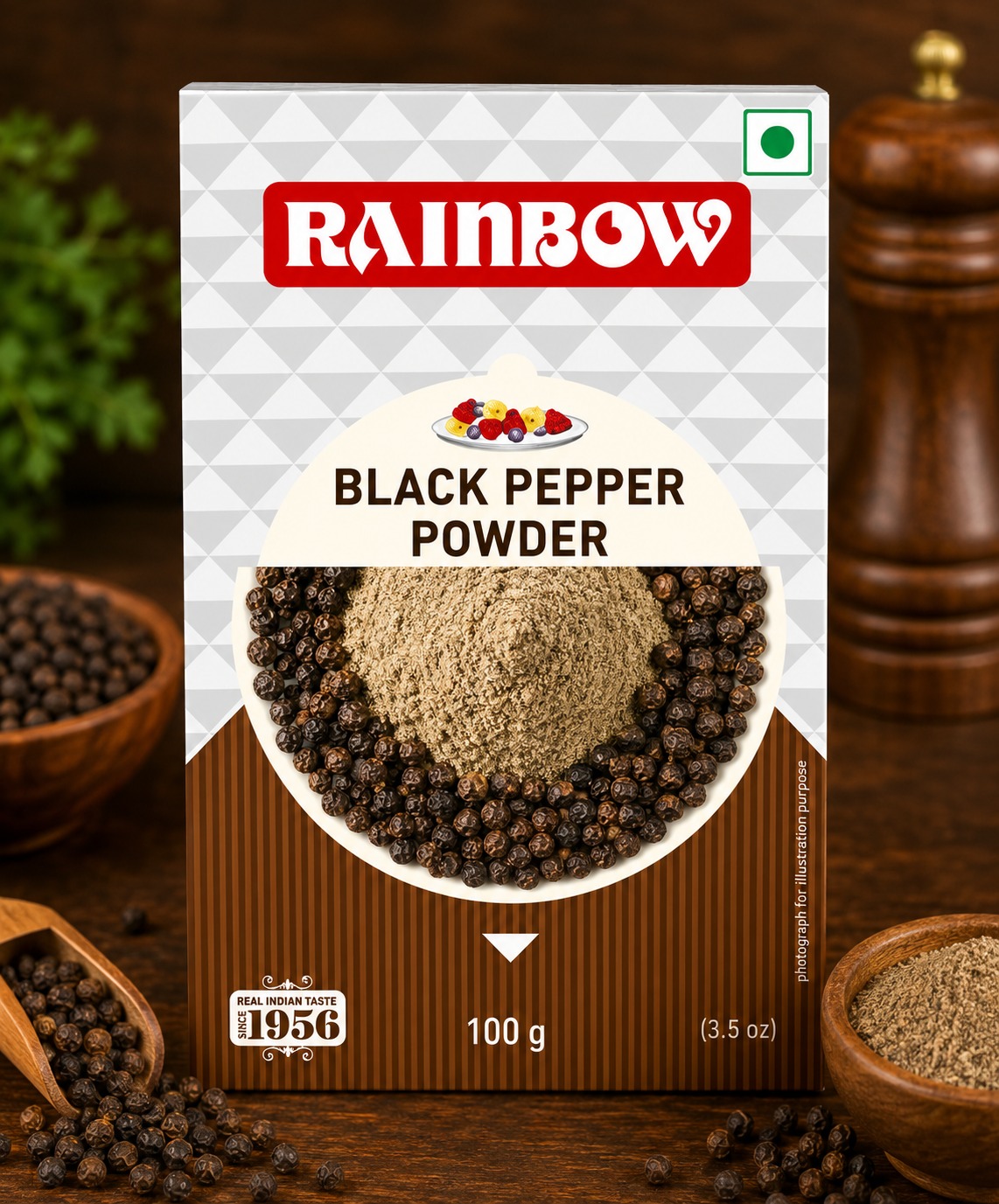
Black pepper is often called the “King of Spices.”
Long before chilli peppers arrived in India, black pepper was the spice that added warmth, depth, and complexity to food. It was so valuable that it was once traded like currency, earning Kerala’s Malabar Coast the title of the “Spice Garden of the World.”
Even today, black pepper remains one of the most prized spices in Indian and international cuisine.
But because of its value, it’s also one of the spices consumers frequently ask about.
- ✦Can black pepper be adulterated?
- ✦How do I identify genuine peppercorns?
- ✦Can papaya seeds really be mixed with pepper?
Let’s separate myths from facts.
What Makes Good Quality Black Pepper?
Good black pepper should have:
- ✦Well-developed peppercorns
- ✦A characteristic wrinkled surface
- ✦Strong spicy aroma
- ✦Firm texture
- ✦Uniform colour (dark brown to black)
Quality depends on:
- ✦Variety
- ✦Harvest maturity
- ✦Drying process
- ✦Storage
- ✦Cleaning
- ✦Packaging
Why Is Black Pepper Called the “King of Spices”?
India, especially Kerala, has been cultivating black pepper for over 2,000 years.
Ancient Roman traders travelled thousands of kilometres to purchase Indian pepper.
In medieval Europe, pepper was so valuable that it was sometimes accepted as payment for taxes and rent.
Today, India continues to produce some of the world’s finest pepper varieties, including the famous Malabar Black Pepper, recognised with a Geographical Indication (GI) tag.
7 Practical Checks You Can Perform
1. Visual Inspection
Spread a handful of peppercorns on a white plate.
Good-quality peppercorns usually appear:
- ✦Dark brown to black
- ✦Wrinkled
- ✦Nearly round
- ✦Similar in size
Avoid pepper containing:
❌ Broken shells
❌ Dust
❌ Excessive stems
❌ Foreign seeds
2. Water Test
Place a few peppercorns in a glass of water.
Good peppercorns are generally dense and tend to sink.
Very light foreign materials may float.
This is only a screening observation because buoyancy can vary with maturity and drying.
3. Crush Test
Press one peppercorn gently with a spoon.
Good pepper should:
- ✦Crack firmly
- ✦Release a strong aroma
- ✦Reveal a pale interior
If the seed crushes easily into dust or has little aroma, it may be old or of poor quality.
4. Aroma Test
Fresh black pepper has:
- ✦Warm aroma
- ✦Woody notes
- ✦Sharp pungency
If it smells:
❌ Musty
❌ Damp
❌ Weak
the pepper may have lost much of its essential oil content due to age or poor storage.
5. Papaya Seed Check
One of the best-known adulteration concerns is the mixing of dried papaya seeds with black pepper.
Why?
Because dried papaya seeds resemble peppercorns in size and appearance.
Fortunately, there are noticeable differences.
Black Pepper
Papaya Seeds
Wrinkled surface
Smooth surface
Strong pepper aroma
Little or no pepper aroma
Hard to crush
Softer
Pale interior
Jelly-like or pale seed centre
If you notice smooth, odourless seeds mixed with peppercorns, avoid using the product and contact the seller or manufacturer.
6. Check the Packaging
Always verify:
- ✦FSSAI Licence Number
- ✦Batch Number
- ✦Manufacturing Date
- ✦Ingredient List
- ✦Manufacturer Details
Buying whole pepper from transparent manufacturers significantly improves traceability.
7. Laboratory Testing
While visual inspection can help identify obvious foreign seeds, laboratory analysis is required to confirm adulteration or detect undeclared contaminants.
Professional laboratories use validated analytical techniques that go far beyond household observations.
Common Myths About Black Pepper
Myth 1
Every floating peppercorn is fake.
Reality
Floating behaviour can vary depending on maturity, drying, and density.
Myth 2
All smooth seeds are black pepper.
Reality
Black pepper naturally has a wrinkled outer surface.
Smooth seeds should be examined carefully.
Myth 3
Ground black pepper is always inferior.
Reality
Professionally processed pepper powder made from quality peppercorns can deliver excellent flavour when packed and stored properly.
Why Responsible Manufacturing Matters
Quality pepper begins long before grinding.
Responsible manufacturers invest in:
- ✦Careful sourcing
- ✦Cleaning
- ✦Removal of foreign matter
- ✦Quality inspection
- ✦Hygienic processing
- ✦Batch testing
- ✦Proper packaging
These steps help preserve pepper’s natural volatile oils and characteristic aroma.
🌈
Why Rainbow Black Pepper Stands Apart
At Rainbow Masala, we believe exceptional black pepper begins with selecting mature, high-quality peppercorns from trusted growing regions.
Since 1956, we’ve focused on sourcing premium spices that deliver authentic flavour, dependable aroma, and consistent performance.
Every batch undergoes quality checks before packaging to help ensure the pepper you receive reflects the standards we’ve upheld for generations.
Our commitment includes:
- ✦Carefully selected whole peppercorns
- ✦Hygienic cleaning and processing
- ✦Batch-wise quality inspection
- ✦FSSAI-compliant manufacturing
- ✦Transparent labelling
- ✦No added artificial colours
- ✦No added artificial flavours
- ✦No added preservatives in our spice blends
Because the King of Spices deserves royal treatment.
Quick Buying Checklist
Before buying black pepper:
☐ Are the peppercorns wrinkled?
☐ Do they have a strong natural aroma?
☐ Are they free from dust and foreign seeds?
☐ Is the FSSAI Licence Number visible?
☐ Is the batch number printed?
☐ Is the packaging intact?
☐ Is the manufacturer clearly identified?
Key Takeaways
- ✦Black pepper should have wrinkled, aromatic, firm peppercorns.
- ✦Dried papaya seeds are a known adulteration concern because they can resemble peppercorns.
- ✦Simple visual checks can help identify obvious issues but cannot replace laboratory analysis.
- ✦Buying from transparent manufacturers improves traceability and consumer confidence.
- ✦Proper sourcing, cleaning, and packaging are essential for preserving pepper quality.
Continue Reading
Continue exploring the Spice Purity & Consumer Awareness series:
- ✦Can You Check Spice Purity at Home?
- ✦How Can You Tell If Turmeric Powder Is Pure?
- ✦How Can You Tell If Chilli Powder Is Pure?
- ✦How Can You Tell If Coriander Powder Is Pure?
- ✦Why Buying Loose Spice Powder Can Be Risky
- ✦What Does the FSSAI Licence Number Mean?
References & Backlinks
Government & Regulatory Sources
Food Safety and Standards Authority of India (FSSAI): Detect Adulteration with Rapid Test (DART)
https://www.fssai.gov.in/cms/checkadulteration.php
Eat Right India: DART Consumer Awareness
https://eatrightindia.gov.in/dart/
FSSAI: Guidance Document on Spices
https://www.fssai.gov.in/upload/uploadfiles/files/Guidance_Document_Spices_23_10_2018.pdf
FSSAI: Manual of Methods of Analysis for Spices & Herbs
https://www.fssai.gov.in/upload/uploadfiles/files/Manual_Revised_Spices_Herbs_22_06_2021.pdf
Research & Industry Sources
Spices Board India: Black Pepper
Indian Institute of Spices Research (ICAR-IISR)
GI Registry India: Malabar Pepper
Editorial Note
This article combines the rich history of black pepper with practical consumer education. By explaining the famous papaya seed adulteration issue, simple visual screening techniques, and the importance of responsible sourcing and manufacturing, it positions Rainbow Masala as a knowledgeable and trustworthy authority while targeting valuable long-tail SEO keywords around black pepper purity and quality.
Taste the difference in your own kitchen.
Explore the Rainbow Masala range, blends crafted with the same care this article describes, or try one of our recipes.