

Purity & Safety · 2026-07-30 · 5 min read
How Can You Tell If Chilli Powder Is Pure? 7 Practical Checks Every Consumer Should Know
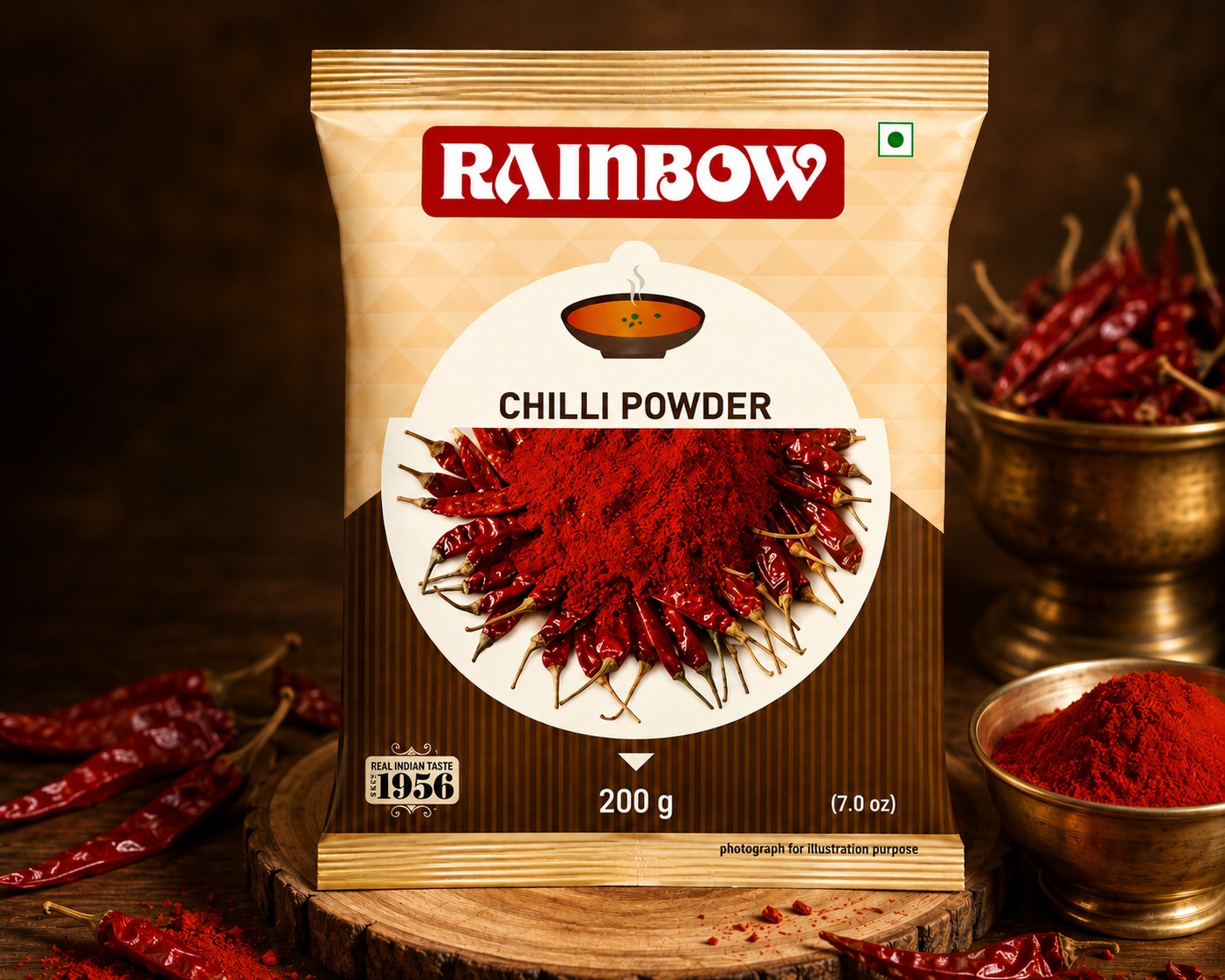
A spoonful of chilli powder can completely transform a dish.
It gives curries their vibrant colour, adds warmth to gravies, enhances marinades, and defines the flavour of countless Indian recipes.
Yet it’s also one of the spices consumers worry about the most.
Questions like:
- ✦Why is one chilli powder brighter than another?
- ✦Can I check chilli powder at home?
- ✦Does deeper red always mean better quality?
are searched thousands of times every month.
The good news is that there are a few simple screening checks you can perform at home. However, these are meant to raise awareness, not provide a definitive answer. Laboratory testing remains the only reliable way to confirm adulteration.
Let’s understand what you can actually check.
What Makes Good Quality Chilli Powder?
Before performing any tests, it’s important to know what quality chilli powder looks like.
A good chilli powder should have:
- ✦Natural chilli aroma
- ✦Uniform texture
- ✦Characteristic colour depending on the chilli variety
- ✦Dry, free-flowing consistency
- ✦No visible foreign particles
Its quality depends on:
- ✦Chilli variety
- ✦Harvest maturity
- ✦Drying process
- ✦Grinding method
- ✦Storage
- ✦Packaging
Why Do Different Chilli Powders Look Different?
Not all chillies are the same.
India grows hundreds of chilli varieties, each with unique characteristics.
For example:
🌶 Kashmiri Chillies
Known for brilliant red colour and mild heat.
🌶 Guntur Chillies
Known for higher pungency and deeper flavour.
🌶 Byadgi Chillies
Popular for vibrant colour and pleasant aroma.
Because of these natural differences, colour alone is never proof of quality.
7 Practical Checks You Can Perform
1. Water Test (For Artificial Colour)
One of the most commonly discussed consumer awareness tests.
How to perform
• Fill a transparent glass with clean water.
• Add one teaspoon of chilli powder.
• Do not stir immediately.
Wait for a few minutes and observe.
What to look for
Generally, good chilli powder settles gradually.
If the water immediately turns an intense bright red before the powder settles, it may indicate the presence of added water-soluble colour.
This is only a screening observation and does not confirm adulteration.
2. Rub Test
Take a small pinch and rub it between your fingers.
Good chilli powder generally feels:
- ✦Fine
- ✦Smooth
- ✦Dry
Be cautious if you notice:
❌ Excessively gritty particles
❌ Sand-like texture
❌ Hard impurities
3. Aroma Test
Fresh chilli powder has a characteristic aroma.
Depending on the variety, it may smell:
- ✦Fruity
- ✦Earthy
- ✦Warm
- ✦Naturally pungent
If the powder smells:
❌ Damp
❌ Musty
❌ Chemical
❌ Almost odourless
it may have deteriorated due to poor storage or age.
4. Visual Inspection
Spread a small quantity on a white plate.
Look for:
- ✦Uniform colour
- ✦Fine powder
- ✦No insects
- ✦No mould
- ✦No foreign particles
Avoid products containing:
- ✦Visible stems
- ✦Dust
- ✦Fibres
- ✦Unusual debris
5. Check the Packaging
One of the easiest quality checks happens before opening the pack.
Always verify:
- ✦FSSAI Licence Number
- ✦Ingredient List
- ✦Manufacturing Date
- ✦Batch Number
- ✦Best Before Date
- ✦Manufacturer Details
Transparent packaging usually reflects transparent manufacturing.
6. Check for Moisture
Good chilli powder should remain loose and free-flowing.
If you notice:
- ✦Excessive lumps
- ✦Moisture inside the pack
- ✦Powder sticking together
the product may have been exposed to humidity during storage.
7. Laboratory Testing
Some adulterants cannot be identified through household observations.
Artificial colours such as Sudan dyes require laboratory analysis using validated analytical methods.
If you strongly suspect adulteration, avoid consuming the product and contact the manufacturer or the appropriate food safety authorities.
Common Adulteration Concerns
Food safety authorities monitor chilli powder because powdered spices may sometimes contain undeclared substances.
Some commonly discussed concerns include:
- ✦Artificial colours
- ✦Excessive stem or husk material
- ✦Dust
- ✦Foreign plant material
- ✦Other fillers
These cannot usually be confirmed by simple visual inspection.
Common Myths About Chilli Powder
Myth 1
The brightest red chilli powder is always the best.
Reality
Different chilli varieties naturally produce different shades of red.
Myth 2
More heat means better quality.
Reality
Pungency depends on the chilli variety, not necessarily quality.
Myth 3
One home test proves purity.
Reality
Home observations are only preliminary screening methods.
Laboratory analysis remains the gold standard.
Myth 4
All chilli powder should look identical.
Reality
Natural agricultural products vary from one harvest to another.
Slight colour differences are completely normal.
Why Responsible Manufacturing Matters
Producing quality chilli powder involves much more than grinding dried chillies.
Responsible manufacturers focus on:
- ✦Careful sourcing
- ✦Cleaning raw material
- ✦Controlled grinding
- ✦Hygienic processing
- ✦Batch testing
- ✦Proper packaging
These practices help preserve flavour, aroma, and consistency.
🌈
Why Rainbow Chilli Powder Stands Apart
At Rainbow Masala, we believe great chilli powder starts long before it reaches the kitchen.
Since 1956, we’ve carefully sourced premium chillies from renowned growing regions known for their colour, flavour, and pungency. Every batch is cleaned, processed under hygienic conditions, and quality-checked before packaging to ensure dependable performance in every recipe.
What makes Rainbow Chilli Powder different?
- ✦Carefully selected chilli varieties for balanced colour and flavour
- ✦Hygienic processing under controlled conditions
- ✦Batch-wise quality inspection
- ✦Consistent colour, aroma, and pungency
- ✦FSSAI-compliant manufacturing
- ✦Transparent ingredient declaration
- ✦No added artificial colours
- ✦No added artificial flavours
Whether you’re preparing a rich curry, a spicy marinade, or a traditional masala blend, Rainbow Chilli Powder is crafted to deliver the authentic taste Indian kitchens have trusted for generations.
Because great food begins with great ingredients.
Quick Buying Checklist
Before buying chilli powder, ask yourself:
☐ Is the packaging sealed?
☐ Is the FSSAI Licence Number visible?
☐ Is the ingredient list clearly mentioned?
☐ Is the manufacturing date recent?
☐ Is the batch number printed?
☐ Does the powder have a natural chilli aroma?
☐ Is the manufacturer clearly identified?
Key Takeaways
- ✦Chilli powder quality depends on sourcing, processing, and storage, not colour alone.
- ✦Simple observations like the water test, aroma, texture, and packaging can help identify obvious concerns but cannot confirm adulteration.
- ✦Different chilli varieties naturally vary in colour and pungency.
- ✦Laboratory analysis remains the most reliable method for confirming adulteration.
- ✦Buying from transparent manufacturers with proper labelling is one of the best ways to ensure quality.
- ✦References & Backlinks
Government & Regulatory Sources
Food Safety and Standards Authority of India (FSSAI): Detect Adulteration with Rapid Test (DART)
https://www.fssai.gov.in/cms/checkadulteration.php
Eat Right India: DART Consumer Awareness Initiative
https://eatrightindia.gov.in/dart/
FSSAI: Guidance Document on Spices
https://www.fssai.gov.in/upload/uploadfiles/files/Guidance_Document_Spices_23_10_2018.pdf
FSSAI: Manual of Methods of Analysis for Spices & Herbs
https://www.fssai.gov.in/upload/uploadfiles/files/Manual_Revised_Spices_Herbs_22_06_2021.pdf
Research & Industry Sources
Spices Board India
ICAR: Indian Institute of Spices Research
Taste the difference in your own kitchen.
Explore the Rainbow Masala range, blends crafted with the same care this article describes, or try one of our recipes.