

Buying Smart · 2026-07-18 · 6 min read
How Did India Become the World’s Spice Capital? A Timeline of How Indian Masalas Changed Our Kitchens Forever
History of the Indian Masala Industry | From Traditional Grinding to Modern Spice Brands
From Sil Batta to Smart Kitchens: How India’s Masala Industry Evolved Over the Last 70 Years
Today, opening a packet of Garam Masala or Pav Bhaji Masala feels routine.
But just a few generations ago, packaged masalas barely existed.
Every household had its own spice recipes.
Every family knew exactly how long to roast coriander, how much cumin to add, and which chillies created the perfect balance of colour and heat.
The journey from those traditional kitchens to today’s modern spice industry is one of India’s greatest food stories, one shaped by generations of home cooks, farmers, researchers, entrepreneurs, and heritage spice brands.
Before Packaged Masalas: Every Kitchen Was Its Own Spice Factory
Before the 1950s, most Indian households rarely purchased ready-made spice powders.
Instead, families bought whole spices from local markets and prepared them at home.
A typical monthly routine included:
- ✦Cleaning spices
- ✦Sun-drying them
- ✦Roasting selected ingredients
- ✦Grinding them using a Sil Batta (grinding stone) or Okhli-Musal (mortar and pestle)
Every household’s Garam Masala tasted slightly different because every family had its own recipe passed down through generations.
Cooking wasn’t just about preparing food, it was about preserving tradition.
1950s–1970s: The Birth of India’s Packaged Masala Industry
As India urbanised, lifestyles began to change.
More families moved to cities.
Working women had less time to roast and grind spices at home.
Consumers wanted convenience without compromising on authentic taste.
This period saw the rise of regional spice manufacturers who began transforming traditional recipes into professionally packed spice blends.
It marked the beginning of India’s organised packaged masala industry.
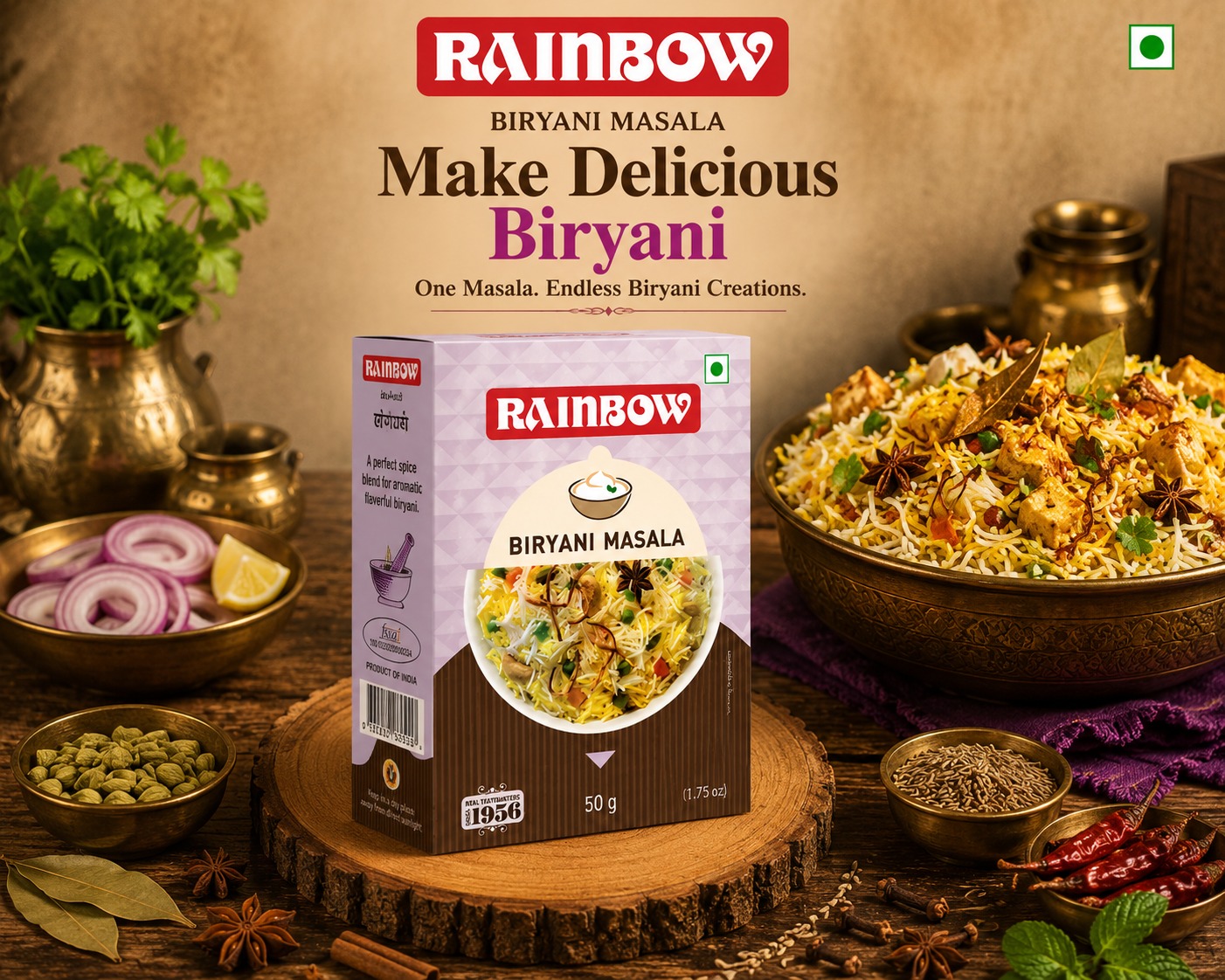
One such brand was Rainbow Masala, established in 1956, at a time when packaged spices were still finding their place in Indian kitchens.
Rather than replacing traditional recipes, brands like Rainbow aimed to preserve them, making familiar flavours available in a more convenient and consistent form.
1971–1995: India Invests in Spice Science
As India’s spice industry expanded, research became increasingly important.
Several milestones transformed spices from a traditional commodity into a scientifically studied agricultural sector:
1971: ICAR launched the All India Coordinated Spices and Cashew Improvement Project, marking the beginning of organised spice research in India.
1975: A dedicated regional spice research station was established in Kozhikode, Kerala.
1986: The National Research Centre for Spices was created to strengthen specialised research.
1995: It was upgraded to the Indian Institute of Spices Research (IISR), which continues to support research in spice cultivation, quality, and post-harvest technology.
These developments helped improve spice cultivation, processing methods, and quality standards across the country.
1987: A Major Turning Point, The Formation of the Spices Board
As Indian spices gained popularity around the world, the Government of India recognised the need for a dedicated organisation to promote exports and improve quality.
The Spices Board of India was constituted under the Spices Board Act, 1986, becoming operational in 1987 under the Ministry of Commerce & Industry.
Its responsibilities include:
- ✦Promoting Indian spice exports
- ✦Supporting farmers
- ✦Encouraging value addition
- ✦Improving post-harvest quality
- ✦Promoting Indian spices globally
This institution continues to play a vital role in strengthening India’s position in the global spice market.
1990s–2000s: The Packaged Masala Revolution
The liberalisation of India’s economy transformed the food industry.
Supermarkets expanded.
Modern retail grew.
Consumers increasingly trusted professionally manufactured food products.
Masalas became available in:
- ✦Boxes
- ✦Laminated pouches
- ✦Sachets
- ✦Bulk HoReCa packs
At the same time, manufacturers invested in:
- ✦Better grinding technology
- ✦Hygienic production
- ✦Improved packaging
- ✦Quality assurance
- ✦Standardised recipes
The focus shifted from simply selling spices to delivering consistent flavour.
2010s: Consumers Started Asking Better Questions
Earlier, many shoppers simply asked:
“Which masala is cheaper?”
Today’s consumers ask much more informed questions:
- ✦Where were these spices sourced?
- ✦Does this product contain artificial colours?
- ✦Does it contain preservatives?
- ✦How is the masala processed?
- ✦Is quality checked before packaging?
- ✦Can I trust the consistency?
The conversation shifted from price to quality, transparency, and trust.
India Today: The World’s Spice Capital
India’s leadership in the spice industry isn’t just cultural, it’s backed by scale.
Today:
- ✦India is the world’s largest producer, consumer, and exporter of spices.
- ✦It cultivates more than 60 of the 109 spice varieties recognised by the International Organization for Standardization (ISO).
- ✦Indian spices and spice products are exported to around 200 countries, with exports reaching USD 4.45 billion in FY 2024–25.
From cumin and chilli to turmeric, pepper, cardamom, coriander, spice oils, and blended masalas, Indian flavours continue to reach kitchens across the globe.
What Hasn’t Changed in 70 Years?
Although manufacturing has evolved dramatically, the reasons people choose a spice brand remain remarkably similar.
Consumers still look for:
- ✦Authentic flavour
- ✦Rich aroma
- ✦Consistent quality
- ✦Trusted recipes
- ✦Reliable performance in the kitchen
Technology has changed.
Packaging has changed.
Consumer expectations have changed.
But the importance of trust has remained constant.
🌈 Since 1956, Rainbow Masala Has Been Part of India’s Spice Journey
When Indian kitchens began transitioning from home-ground spices to professionally crafted blends, Rainbow Masala was already part of that journey.
Since 1956, we’ve grown alongside India’s spice industry while staying committed to the values that built our reputation:
- ✦Carefully sourced whole spices
- ✦Traditional recipes inspired by regional Indian cuisine
- ✦Consistent flavour across every batch
- ✦Hygienic manufacturing
- ✦Quality checks before packaging
- ✦No added artificial colours
- ✦No added artificial flavours
- ✦No added preservatives in our spice blends
Today, Rainbow Masala proudly serves households, restaurants, hotels, caterers, wholesalers, and export markets, continuing a tradition that began nearly seven decades ago.
Because while kitchens may have evolved from grinding stones to smart appliances, great taste has always begun with great spices.
Timeline of India’s Masala Industry
Year
Milestone
Before 1950
Most Indian households grind spices at home using Sil Batta and Okhli-Musal
1956.0
Rainbow Masala begins its journey with traditional spice blends
1971.0
ICAR launches organised spice research programme
1975.0
Dedicated spice research station established
1987.0
Spices Board of India becomes operational
1995.0
Indian Institute of Spices Research (IISR) established
Today
India exports spices to around 200 countries and remains the world’s largest producer, consumer, and exporter
Key Takeaways
- ✦India’s spice journey evolved from household grinding traditions to advanced manufacturing while preserving regional recipes.
- ✦Government-led research and institutions such as IISR and the Spices Board strengthened quality, cultivation, and exports.
- ✦India is now the world’s largest producer, consumer, and exporter of spices.
- ✦Trust, consistency, and authentic flavour remain the defining qualities of respected spice brands.
- ✦Heritage brands continue to bridge traditional recipes with modern food manufacturing.
Taste the difference in your own kitchen.
Explore the Rainbow Masala range, blends crafted with the same care this article describes, or try one of our recipes.