

Masala Secrets · 2026-07-08 · 4 min read
Why Do Chefs Use White Pepper Instead of Black Pepper? The Secret Behind This Subtle Spice
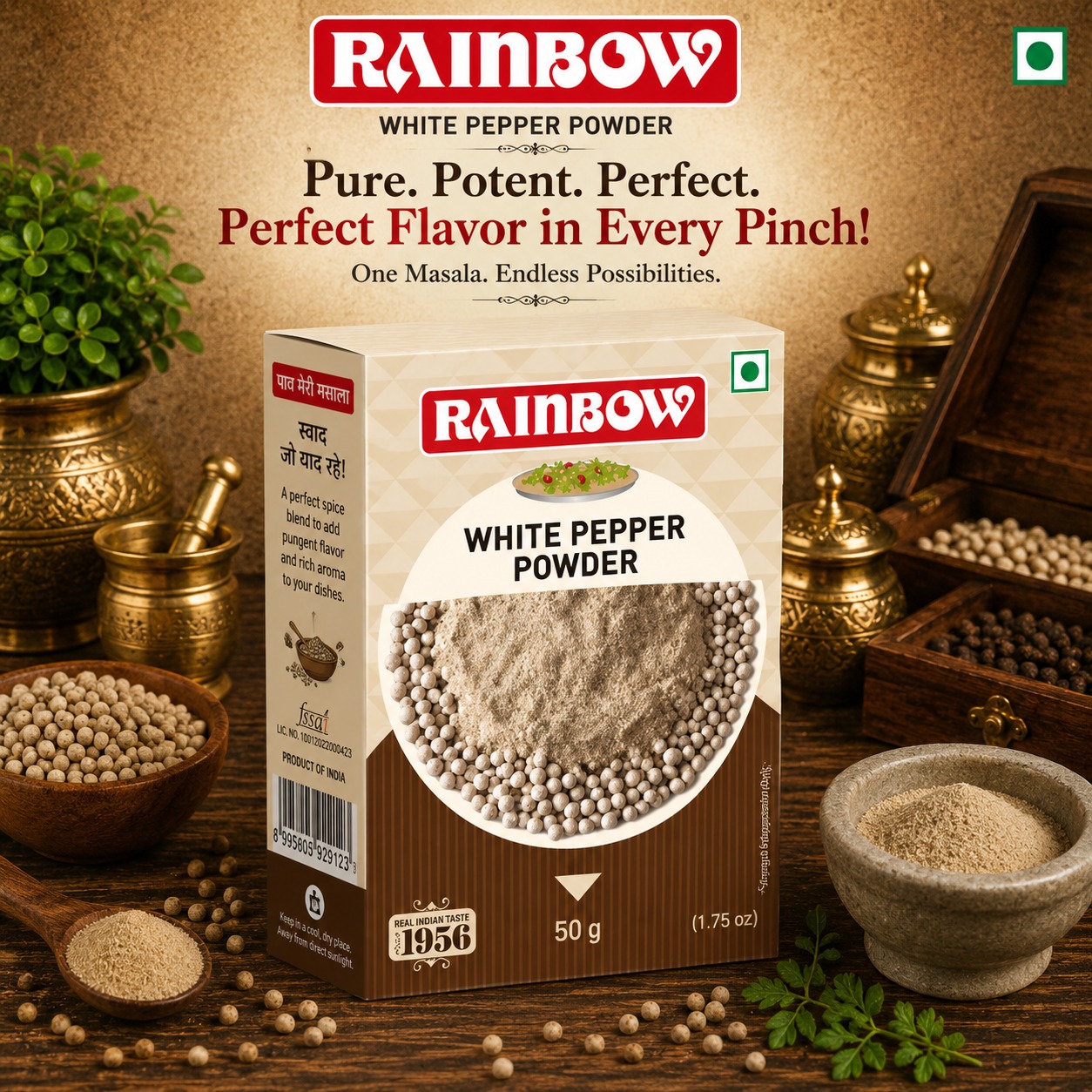
Why Do Chefs Use White Pepper? Benefits, Uses & How It’s Different from Black Pepper
Imagine tasting a smooth cream soup, a silky white sauce, or a delicate Chinese stir-fry.
The dish has warmth and depth, but you don’t see any black specks.
What’s the secret?
More often than not, it’s White Pepper.
While Black Pepper is a staple in Indian kitchens, White Pepper has earned a special place in professional kitchens because of its subtle flavour and clean appearance.
Both come from the same plant, yet they create entirely different dining experiences.
What Is White Pepper?
White Pepper comes from the berries of the Piper nigrum plant, the same vine that produces Black Pepper.
The difference lies in the harvesting and processing.
For White Pepper, the berries are allowed to ripen fully until they turn red.
They are then soaked in water so the outer fruit softens and can be removed.
The remaining inner seed is washed, dried, and becomes the White Pepper we know today.
This extra processing gives White Pepper its distinctive colour and flavour.
Why Doesn’t White Pepper Taste Like Black Pepper?
Although they share the same origin, White Pepper develops a different flavour because its outer layer has been removed.
Black Pepper retains its skin, giving it:
- ✦A fresh, woody aroma
- ✦Bright, citrus-like notes
- ✦Robust flavour
White Pepper offers:
- ✦A softer aroma
- ✦Earthier flavour
- ✦Gentle lingering warmth
- ✦Smooth finish
Rather than dominating a dish, White Pepper blends quietly into the background, enhancing other ingredients.
Why Do Professional Chefs Prefer White Pepper?
White Pepper isn’t chosen because it’s stronger.
It’s chosen because it’s more discreet.
Its light colour allows chefs to season pale dishes without affecting their appearance.
This makes it especially valuable in:
- ✦White gravies
- ✦Cream soups
- ✦White sauces
- ✦Mashed potatoes
- ✦Alfredo pasta
- ✦Chinese fried rice
- ✦Stir-fried vegetables
- ✦Clear soups
- ✦Seafood dishes
- ✦Continental cuisine
The seasoning remains almost invisible while still adding depth.
White Pepper in Asian and European Cuisine
While Indian kitchens traditionally favour Black Pepper, White Pepper plays a major role in many international cuisines.
In Chinese cooking, it is commonly used in soups, noodle dishes, dumpling fillings, and stir-fries.
European chefs often rely on White Pepper for cream-based sauces and potato dishes because it maintains a smooth appearance without dark flecks.
Its versatility has made it an essential ingredient in professional kitchens around the world.
Restaurant Tips for Using White Pepper
🍲 1. Add It During Cooking
White Pepper blends beautifully into gravies and soups when added during the cooking process.
Its flavour develops gradually as the dish simmers.
🥄 2. Use It Where Appearance Matters
For dishes such as white sauces, cream soups, and mashed potatoes, White Pepper seasons without changing the visual presentation.
⚖️ 3. Balance Is Important
Because White Pepper has a lingering warmth, small quantities are often enough.
The objective is to complement the dish, not overpower it.
📦 4. Store It Properly
Like all spices, White Pepper retains its flavour best when stored in an airtight container away from moisture, heat, and direct sunlight.
Why It Matters in HoReCa
Restaurants and hotels often prepare dishes where appearance is just as important as flavour.
White Pepper allows chefs to maintain:
- ✦Smooth presentation
- ✦Consistent seasoning
- ✦Balanced warmth
- ✦Uniform flavour across every batch
For commercial kitchens, it’s an ingredient that delivers elegance without drawing attention to itself.
🌈 The Rainbow Masala Difference
Great White Pepper begins with carefully selected ripe pepper berries and precise processing.
Since 1956, Rainbow Masala has been sourcing premium spices from trusted growing regions and applying rigorous quality standards to every ingredient.
Our White Pepper is produced using carefully processed peppercorns that retain their natural warmth while offering the clean appearance and subtle flavour chefs expect.
Every batch is:
- ✦Made from premium-quality pepper berries
- ✦Carefully processed for consistent colour and flavour
- ✦Hygienically cleaned and packed
- ✦Quality-tested for reliable performance
- ✦Suitable for households, restaurants, hotels, caterers, and food manufacturers
Whether you’re preparing a velvety soup, a rich white gravy, or a refined international dish, Rainbow White Pepper delivers warmth without overpowering the recipe.
Because sometimes, the best ingredient is the one guests don’t notice, but would certainly miss if it wasn’t there.
Key Takeaways
- ✦White Pepper and Black Pepper come from the same plant but are processed differently.
- ✦White Pepper is made by removing the outer skin of fully ripe pepper berries.
- ✦It has a milder aroma and earthier flavour than Black Pepper.
- ✦Professional chefs use White Pepper in pale-coloured dishes where appearance matters.
- ✦Proper sourcing and processing help preserve its subtle warmth and consistent quality.
Continue Reading
Continue exploring the Rainbow Spice Knowledge Hub:
- ✦Why Is Black Pepper Called the King of Spices?
- ✦What Is the Difference Between Black Pepper and White Pepper?
- ✦Why Is Garam Masala Added at the End of Cooking?
- ✦Why Does Grinding Temperature Matter in Spice Manufacturing?
- ✦What Is Volatile Oil (VO) in Spices?
- ✦Why Do Chefs Roast Cumin Before Using It?
- ✦What Is the Difference Between a Spice Blend, Masala, and Seasoning?
Sources & further reading
Taste the difference in your own kitchen.
Explore the Rainbow Masala range, blends crafted with the same care this article describes, or try one of our recipes.