

Masala Secrets · 2026-06-26 · 4 min read
Why Do Restaurants Add Kasuri Methi at the End of Cooking? The Secret Behind Restaurant-Style Aroma
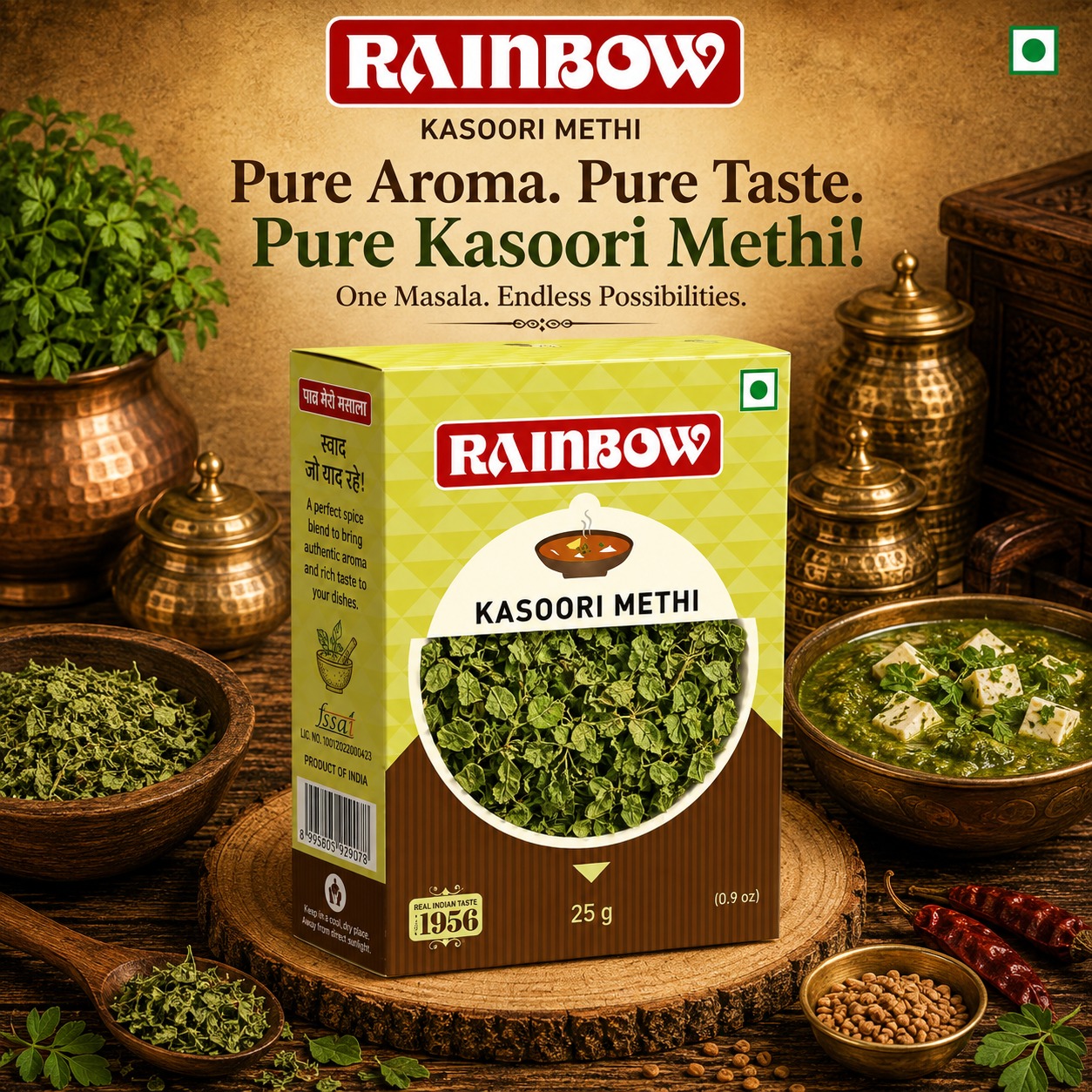
Have you ever wondered why restaurant curries have a rich, unmistakable aroma that seems difficult to recreate at home?
Many people assume the secret lies in extra butter, cream, or a special masala.
While those ingredients certainly contribute to the flavour, experienced chefs often rely on something much simpler.
Kasuri Methi.
Just a small pinch of these dried fenugreek leaves, added at the right stage, can transform the aroma and character of an entire dish.
The secret isn’t the quantity.
It’s knowing when and how to use it.
What Is Kasuri Methi?
Kasuri Methi is made from the leaves of the fenugreek plant (Trigonella foenum-graecum), which are carefully harvested and naturally dried.
Unlike fresh fenugreek leaves, drying concentrates their aroma, making Kasuri Methi significantly more flavourful.
Although fenugreek is cultivated across India, the name Kasuri Methi is associated with Kasur, a historic region in Punjab (now in present-day Pakistan), where this style of dried fenugreek became particularly well known.
Today, it has become an essential ingredient in Indian kitchens around the world.
Why Does Kasuri Methi Taste So Different from Fresh Fenugreek?
Fresh methi leaves contribute mild bitterness and a green, earthy flavour.
When the leaves are carefully dried, much of their moisture is removed while their aromatic compounds become more concentrated.
The result is an ingredient that offers:
- ✦A distinctive herbal aroma
- ✦Gentle bitterness that balances rich gravies
- ✦Greater flavour intensity than fresh leaves
This concentrated character is what makes Kasuri Methi such a valuable finishing ingredient.
Why Do Chefs Add It at the End?
Like many aromatic herbs, Kasuri Methi contains naturally occurring volatile compounds that contribute to its fragrance.
Prolonged cooking can reduce these delicate aromas.
That’s why professional chefs usually add it during the final few minutes of cooking.
By doing so, they preserve more of its distinctive fragrance while allowing it to blend naturally into the gravy.
The result is a curry that’s more aromatic, balanced, and memorable.
Why Do Chefs Crush Kasuri Methi Before Using It?
One simple technique makes a noticeable difference.
Before adding Kasuri Methi, chefs gently rub it between their palms.
This helps break the dried leaves into smaller pieces and releases more of their natural aromatic compounds.
It’s a small step, but one that contributes significantly to the final aroma.
Which Dishes Benefit Most from Kasuri Methi?
Kasuri Methi complements a wide variety of recipes, particularly those with rich gravies.
It’s commonly used in:
- ✦Paneer Butter Masala
- ✦Butter Chicken
- ✦Dal Makhani
- ✦Chicken Curry
- ✦Mixed Vegetable Curry
- ✦Shahi Paneer
- ✦Paneer Lababdar
- ✦Cream-based gravies
- ✦Tandoori marinades
Some chefs also use it creatively in soups, stuffed breads, fusion sauces, and savoury snacks.
How do restaurants use Kasoori Methi
🌿 1. Crush Before Adding
Lightly crushing Kasuri Methi between your palms releases its aroma more effectively than adding the leaves directly.
⏱️ 2. Add It at the End
Adding it too early can reduce its distinctive fragrance.
For maximum aroma, incorporate it during the final stage of cooking.
🧂 3. Use It Sparingly
Kasuri Methi has a concentrated flavour.
A small quantity is usually enough to enhance an entire dish.
Adding too much may overpower other ingredients.
🥘 4. Pair It with Rich Gravies
Kasuri Methi works particularly well in tomato- and cream-based gravies, where its herbal notes balance richness and add complexity.
Why It Matters in HoReCa
For restaurants, hotels, cloud kitchens, and caterers, aroma is often the first thing guests experience.
That unmistakable fragrance as a curry arrives at the table creates anticipation before the first bite.
Using high-quality Kasuri Methi consistently helps kitchens achieve:
- ✦A signature restaurant-style aroma
- ✦Balanced flavour across batches
- ✦Consistent customer experience
- ✦Premium presentation with minimal effort
Sometimes, the smallest finishing ingredient creates the biggest impression.
🌈 The Rainbow Masala Difference
Great Kasuri Methi isn’t simply about dried leaves.
It’s about how those leaves are selected, dried, and preserved.
At Rainbow Masala, we carefully source premium-quality fenugreek leaves and use controlled drying methods designed to retain their natural aroma, colour, and flavour.
Our Kasuri Methi is:
- ✦Made from carefully selected fenugreek leaves
- ✦Naturally dried to preserve its characteristic aroma
- ✦Hygienically processed and packed for freshness
- ✦Carefully quality-checked for consistency
- ✦Suitable for home kitchens, restaurants, caterers, and HoReCa businesses
Whether you’re preparing Paneer Butter Masala, Butter Chicken, Dal Makhani, Shahi Paneer, or a rich vegetable curry, Rainbow Kasuri Methi delivers the finishing touch that transforms a good dish into one guests remember.
Because the difference between an ordinary curry and an exceptional one often comes down to one final handful of carefully crafted flavour.
Key Takeaways
- ✦Kasuri Methi is made from naturally dried fenugreek leaves.
- ✦Drying concentrates its aroma, making it more flavourful than fresh fenugreek.
- ✦Professional chefs usually add Kasuri Methi towards the end of cooking to preserve its aroma.
- ✦Crushing the leaves before adding them helps release their natural fragrance.
- ✦Kasuri Methi is one of the defining finishing ingredients in many restaurant-style Indian curries.
Sources & further reading
Taste the difference in your own kitchen.
Explore the Rainbow Masala range, blends crafted with the same care this article describes, or try one of our recipes.